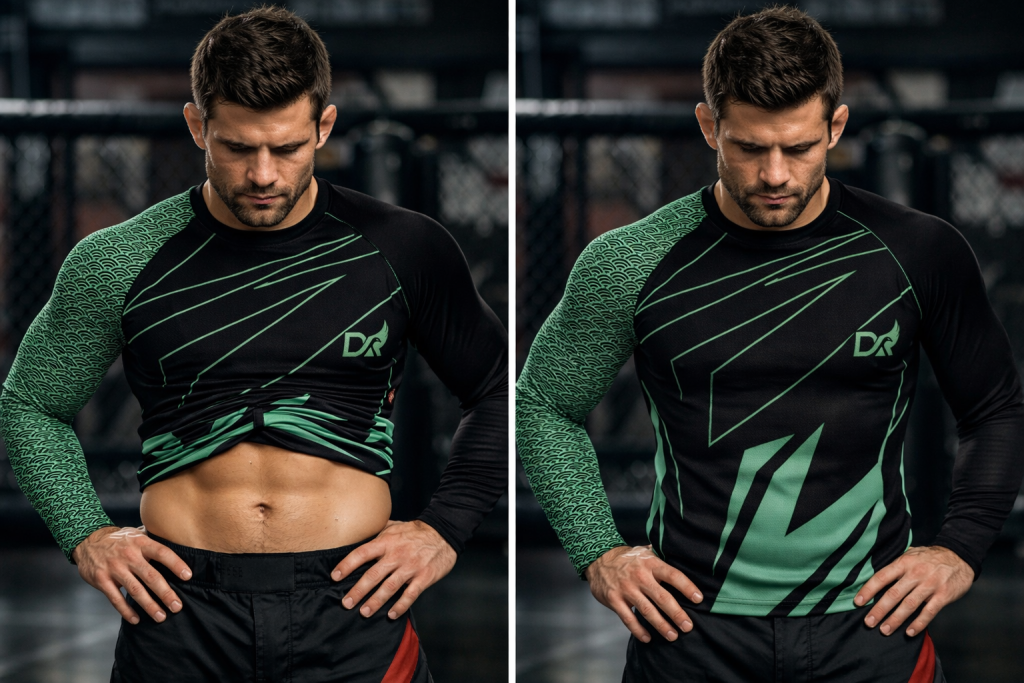
A rash guard that rolls up during training is not just a comfort issue; it is often a pattern engineering problem.
Many MMA and BJJ brands focus on artwork, sublimation, and fabric selection, but overlook a critical factor:
How stretch affects garment grading.
When this is ignored, the rash guard can shorten vertically during wear, ride above the waist, and create what many athletes call the crop-top problem.
This issue can lead to poor athlete experience, customer complaints, increased returns, and damaged brand trust.
In many cases, the issue starts with poor grading.
Stretch fabrics expand horizontally when worn, especially under movement and body pressure.
But when the fabric expands wider, it can also shorten vertically.
That shortening creates upward tension, causing the garment to ride above the waist.
This is often a fit engineering issue — not simply a fabric problem.
Common causes include:
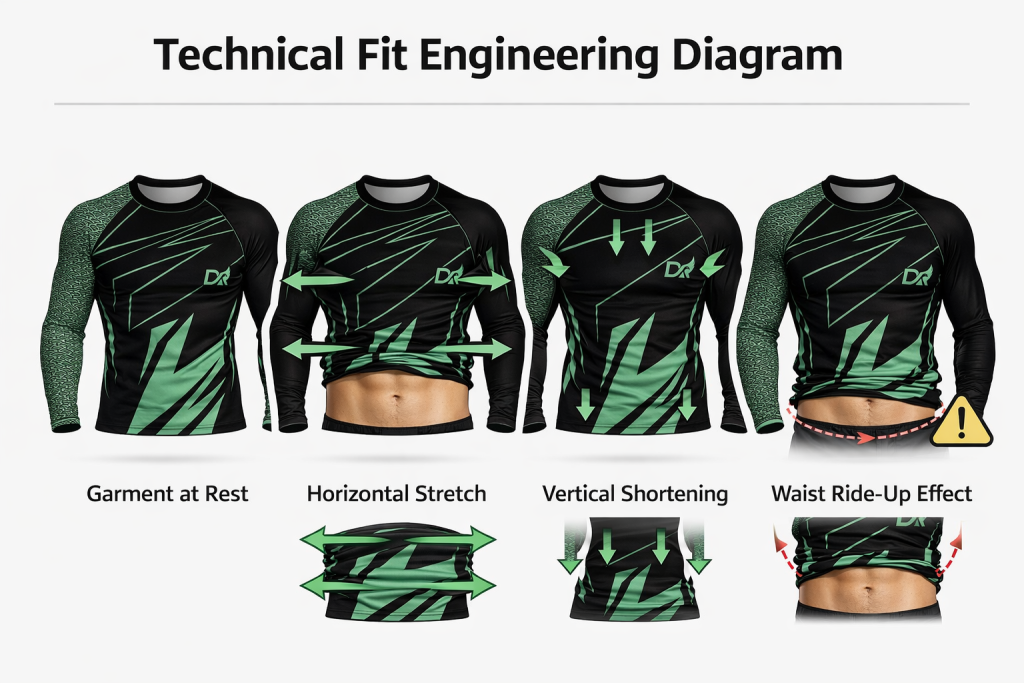
The problem becomes clearer when you look at how compression garments behave under tension.
As the garment stretches across the chest and torso, vertical length can reduce.
That reduction creates upward pull at the hem.
The result:
The rash guard begins riding up during rolls, drills, or grappling exchanges.
This is the “crop-top problem.
Many brands also create problems by mixing sizing systems.
Some use:
This creates inconsistent fit.
A medium in one system may fit like a small in another.
For international gyms and sportswear brands, this often leads to returns, complaints, and lost repeat customers.
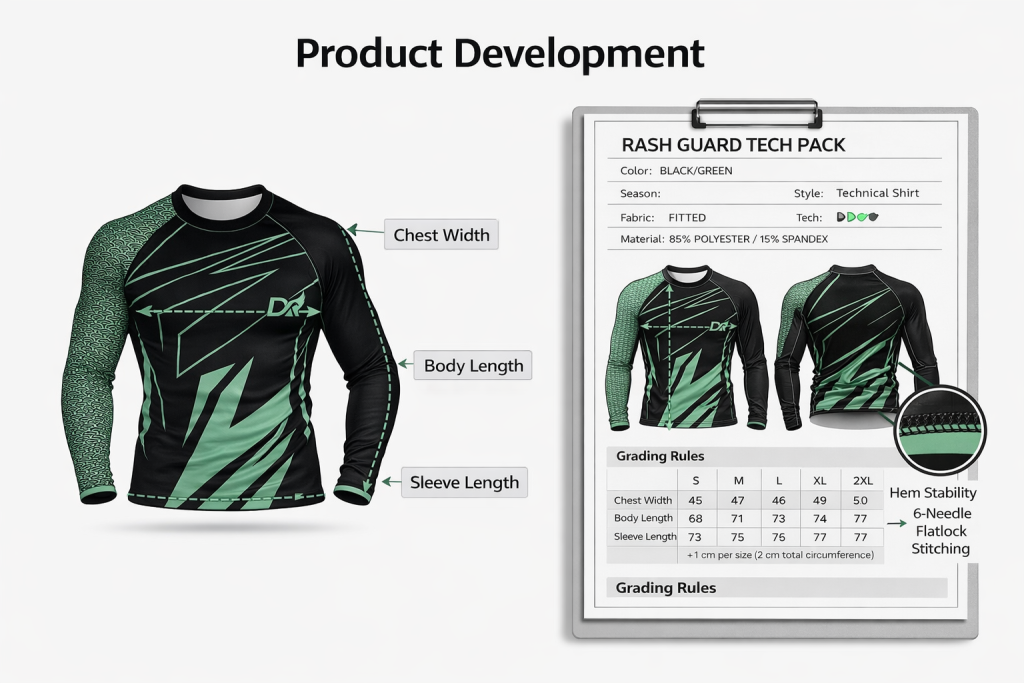
Fit problems are usually solved before manufacturing — not after.
That starts with production-ready development.
A proper rash guard requires:
This is how ride-up problems are prevented before production begins.
The crop-top problem is not random.
It is usually caused by poor grading, weak sizing logic, or incomplete production specifications.
Brands that solve these technical issues early create:
And it starts long before the garment reaches the factory.
If you’re developing custom MMA, BJJ, or performance apparel and want to avoid costly fit issues before manufacturing, Design Artico can help with production-ready rash guard design and technical development.
Need help developing production-ready rash guard tech packs? Contact Design Artico.
Factors to Consider Before Buying Rash Guards Online...
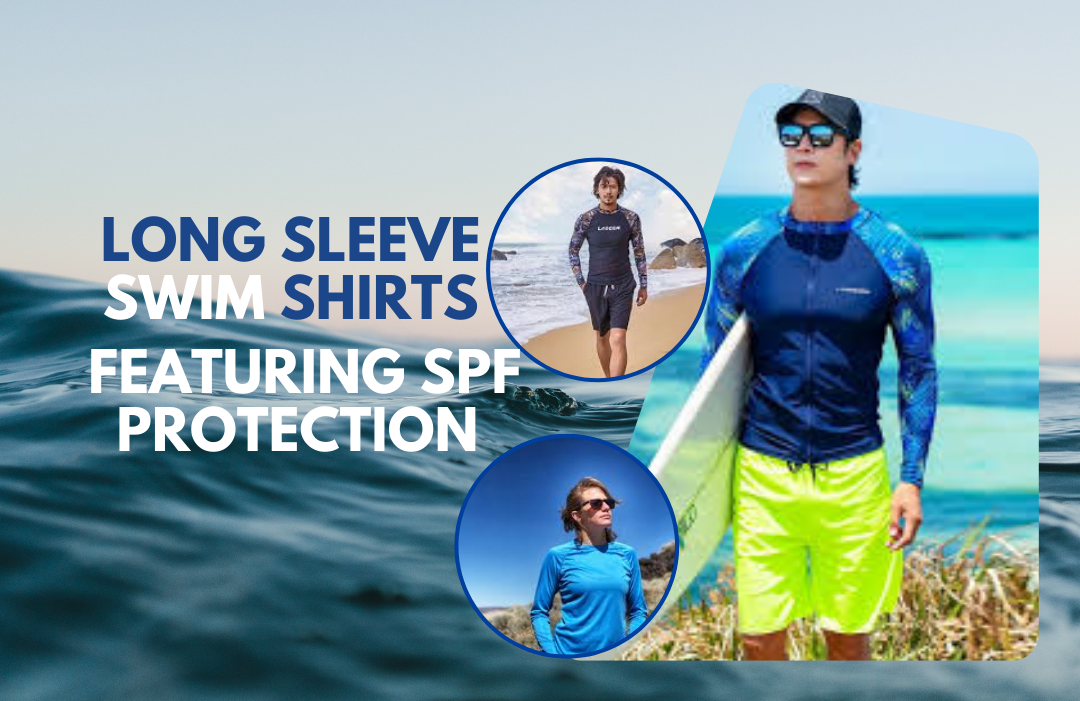
We all love to soak up the sun's...

Proper Storage:When it comes to maintaining the quality...

Introduction to Rash Guards Rash guards have become...

Last night, while grabbing dinner at a local...