Custom activewear needs to do more than look good.
A strong activewear design should balance appearance, comfort, movement, fabric performance, durability and brand identity.
This is especially important for gym tops, performance T-shirts, compression wear, leggings and other workout clothing. A design that looks impressive in Photoshop can still fail when it is produced with the wrong fabric, unsuitable construction or poor artwork placement.
Whether you are developing your first gymwear collection or expanding an existing sportswear brand, the design process should begin with the product’s intended use.
In this guide, we’ll cover the key factors involved in creating custom activewear that looks professional and performs properly.
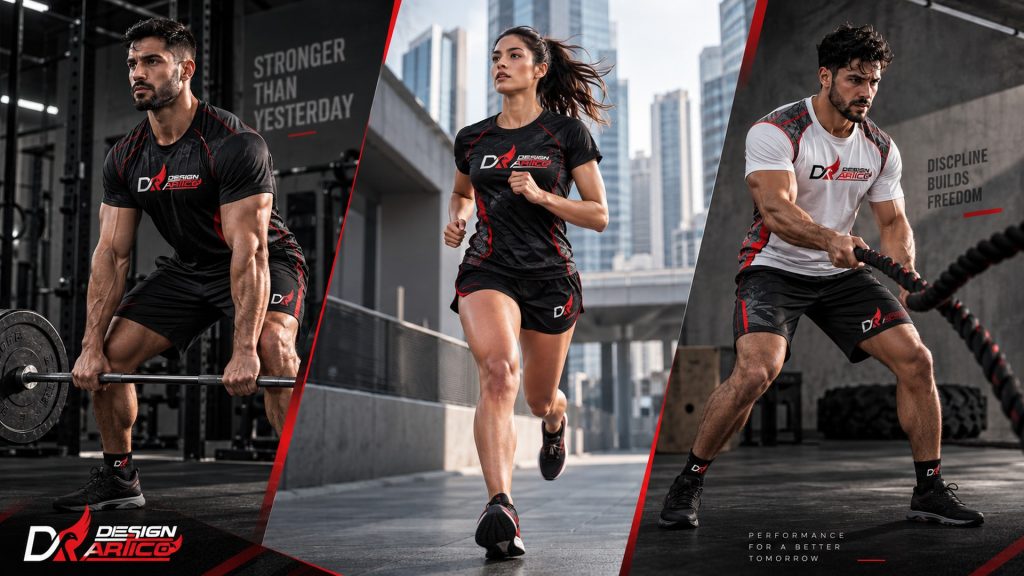
Before designing graphics or choosing colors, determine exactly how the garment will be used.
A gym T-shirt designed for weight training may have different requirements from a running shirt or high-intensity training top.
Consider:
The intended activity influences your decisions about fabric, fit, weight, ventilation, stretch and construction.
For example, a performance garment designed for intense workouts may need moisture-management properties and construction that allows unrestricted movement.
What does the athlete need this garment to do?
Once that is clear, the design decisions become much easier.
Fabric is one of the most important decisions in activewear development.
Common materials include:
The best choice depends on the garment and its intended use.
Polyester is widely used in performance apparel because it is lightweight, durable and commonly used with sublimation printing.
Spandex provides stretch and is often blended with other fibers to improve garment flexibility and fit.
Nylon is known for its durability and smooth hand feel and is commonly used in various performance garments.
Blends can combine properties from different fibers.
For example, a polyester-spandex blend can provide a combination of stretch and performance characteristics suitable for certain activewear applications.
However, fabric composition alone isn’t enough.
You should also evaluate:
GSM + stretch + recovery + hand feel + opacity + durability + intended application
An activewear garment needs to work with the body rather than restrict it.
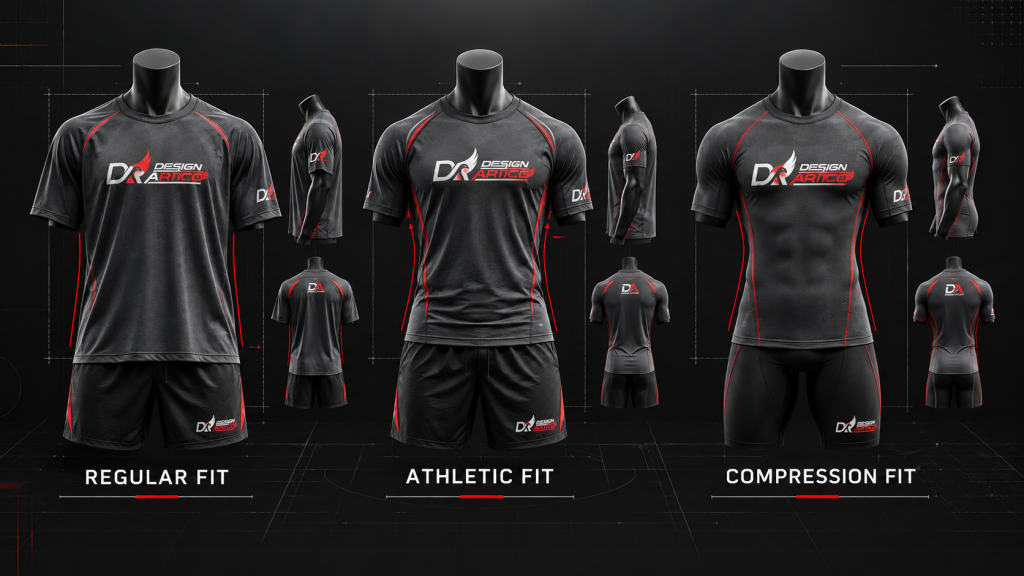
Depending on the product, you might choose:
More relaxed and suitable for general gymwear or lifestyle applications.
Closer to the body while still allowing movement.
Designed to fit tightly against the body.
The correct fit depends on your product positioning and target customer.
A common mistake is designing the garment visually without considering how the pattern and fabric will interact with the body.
Your artwork should be evaluated on the actual garment shape rather than only on a flat digital canvas.
Activewear is worn while the body is moving.
That means artwork and construction should be considered from multiple positions:
Large graphics can change appearance when the fabric stretches.
Seams can also affect how graphics and patterns appear.
For this reason, professional activewear design should consider garment panels and construction, not just the front and back view.
This is particularly important for sublimated activewear.
A design shouldn’t simply be placed inside a rectangular canvas and expected to work perfectly on the finished garment.
Instead, consider:
For complex garments, the artwork should follow the actual panel structure.
This helps reduce unexpected distortion and alignment problems during production.
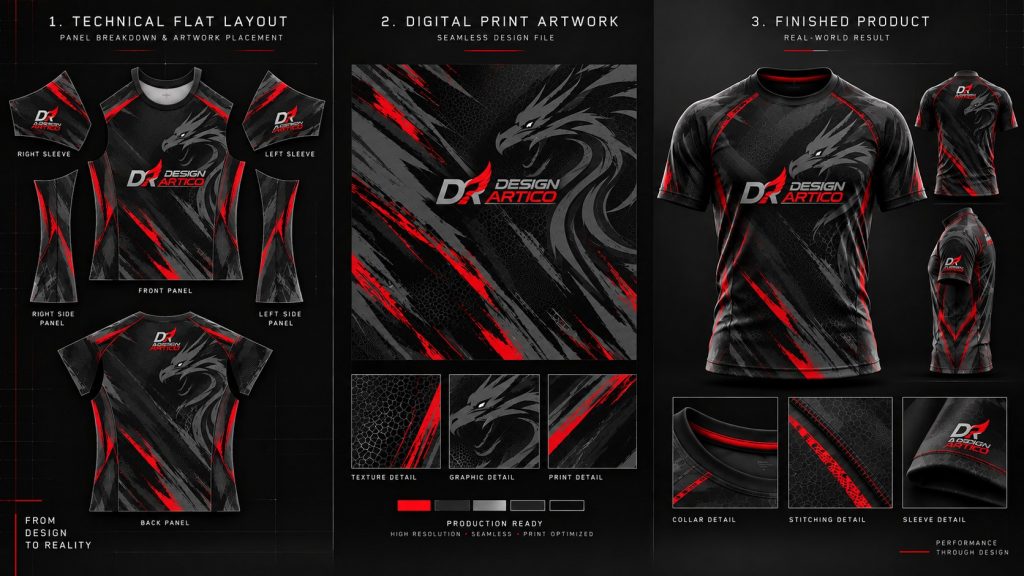
Your printing method should match your fabric and design requirements.
Sublimation is widely used for polyester-based sportswear and can produce detailed full-color graphics across garment panels.
It is particularly useful for:
Direct-to-film printing can be useful for certain graphic applications and garment placements.
Screen printing remains widely used for traditional apparel graphics, particularly where specific production requirements make it suitable.
The important point is:
Don’t choose the printing method before understanding the garment and fabric.
The fabric, artwork, quantity and desired finish should all be considered together.
Custom activewear should look like a brand, not just a decorated blank garment.
Your collection should have a consistent visual language.
Consider:
For example, a performance brand might use technical typography, geometric graphics and controlled color blocking, while a lifestyle fitness brand may use a more minimal visual direction.
Consistency across multiple products makes the collection look more professional.
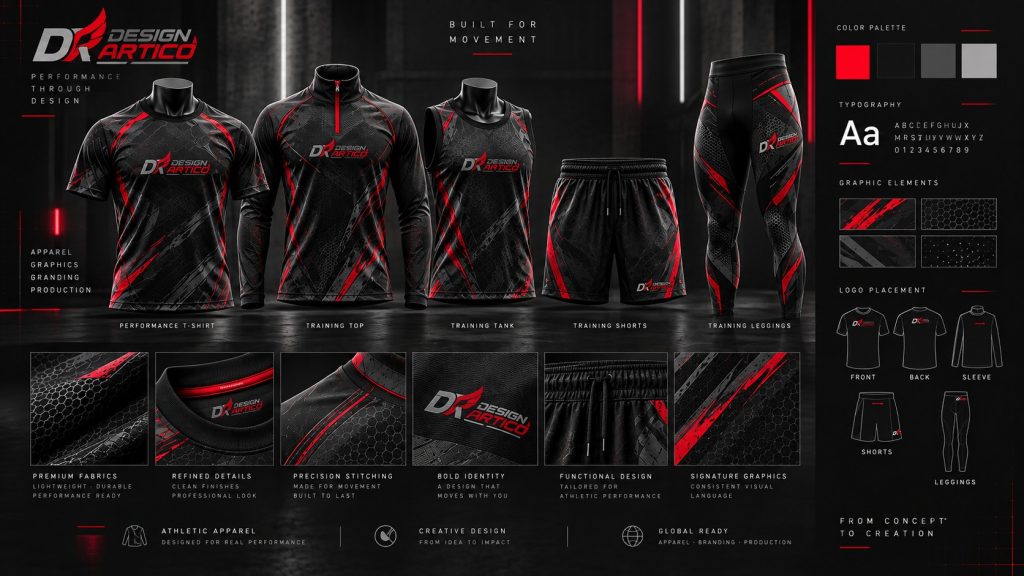
A professional activewear design needs to account for the physical construction of the garment.
Depending on the product, this can include:
These details can significantly affect the final appearance and functionality of the garment.
The designer and manufacturer should therefore work from clear production information.
One of the biggest differences between a basic apparel graphic and professional apparel development is production readiness.
Your final artwork may need to include:
For sublimation apparel, artwork should be prepared according to the manufacturer’s templates and production requirements.
A beautiful design file that cannot be correctly manufactured is not a finished apparel design.
Before bulk production, review the design on an actual sample.
Check:
This stage allows problems to be identified before they affect a large production order.
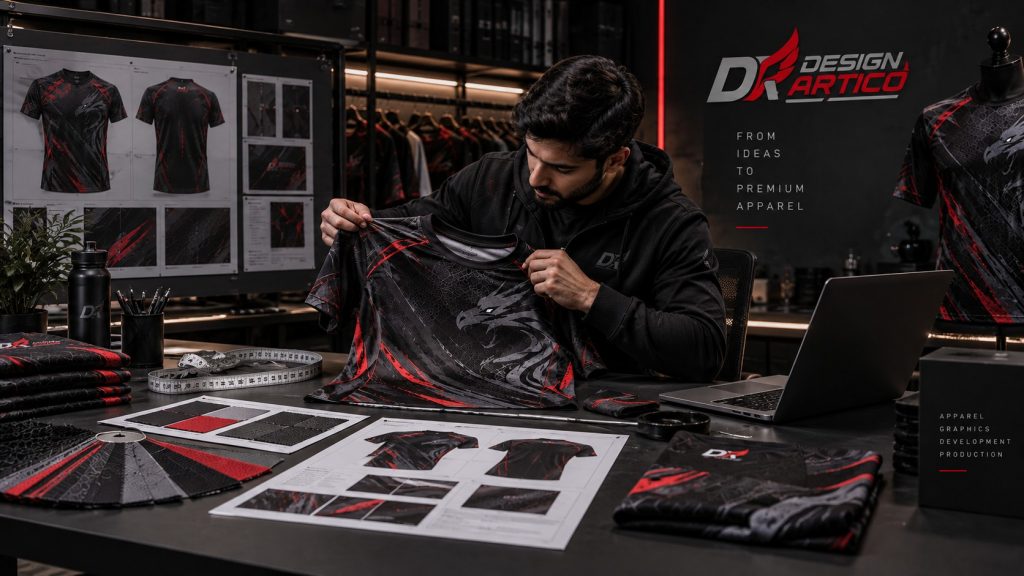
If you are building an activewear brand, think beyond one garment.
A stronger collection may include:
These products should share common design elements.
For example:
Same logo treatment + same typography + related graphics + consistent colors = stronger brand identity.
This also makes future product development easier.
Fabric should influence the design from the beginning.
Activewear needs to work across the entire garment.
Artwork and graphics can change appearance when fabric stretches.
Poor artwork preparation can create printing and production problems.
Never assume the first production result will automatically match the digital design.
Performance apparel needs to balance visual design and physical functionality.
Before sending your design to manufacturing, confirm:
| Requirement | Ready? |
|---|---|
| Product purpose defined | ✓ |
| Fabric selected | ✓ |
| Fit established | ✓ |
| Artwork completed | ✓ |
| Panel layout prepared | ✓ |
| Logo placement confirmed | ✓ |
| Printing method selected | ✓ |
| Production files prepared | ✓ |
| Sample reviewed | ✓ |
| Final revisions completed | ✓ |
This simple checklist can prevent many avoidable production issues.
Developing professional activewear requires more than creating an attractive graphic.
DesignArtico helps apparel brands develop custom sportswear and activewear designs with a focus on production-ready artwork and professional visual presentation.
Services can include:
From the initial concept to production-ready artwork, the goal is to create designs that are both visually strong and practical for manufacturing.
Planning a custom activewear collection? Contact DesignArtico to discuss your apparel design requirements.
Custom activewear design involves creating original workout and performance garments around a brand’s specific requirements, including graphics, colors, fit, fabric, construction and branding.
There is no single fabric that is best for every activewear product. Polyester, nylon, spandex and blended fabrics can all be suitable depending on the garment’s intended use and performance requirements.
Sublimation is commonly used for polyester-based sportswear because it can produce detailed, full-color artwork across garment panels.
A tech pack communicates technical details such as measurements, materials, construction, colors and production requirements to help the manufacturer produce the garment accurately.
Yes. A physical sample allows you to evaluate fit, fabric, printing, construction, artwork placement and overall quality before committing to bulk production.
Designing custom activewear is a balance between aesthetics, functionality and manufacturability.
The strongest designs start with a clear understanding of the product’s purpose, followed by appropriate fabric selection, fit development, artwork planning and production preparation.
Don’t treat activewear as a normal T-shirt with a graphic added to it.
Consider the entire garment—from the fabric and fit to the panels, printing, construction and final brand presentation.
When these elements work together, your activewear has a much stronger foundation for successful production and long-term brand development.