
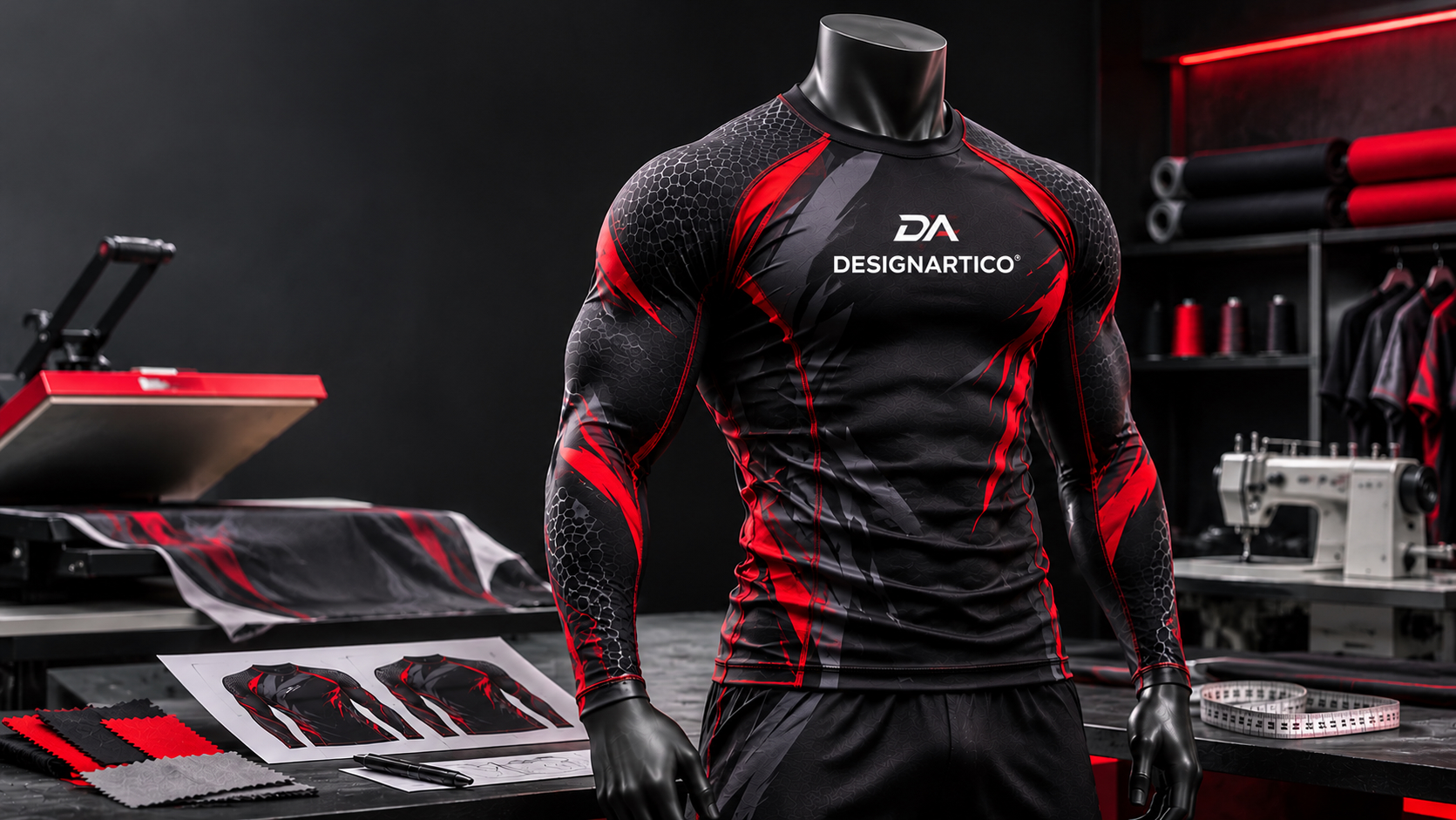
An MMA rash guard is more than just a compression shirt. It is an essential piece of apparel for athletes involved in mixed martial arts, Brazilian Jiu-Jitsu (BJJ), grappling, wrestling and other combat sports.
Unlike ordinary gym T-shirts, rash guards are designed for demanding physical activities that involve constant movement, stretching, friction and contact with training partners.
For apparel brands, gyms and combat sports businesses, developing a high-quality rash guard requires careful attention to fabric selection, fit, stitching, printing and garment construction.
A visually attractive design is important, but the finished product must also provide comfort, flexibility and durability during training.
In this guide, we’ll explore the important features that separate a professionally developed MMA rash guard from an ordinary compression shirt.
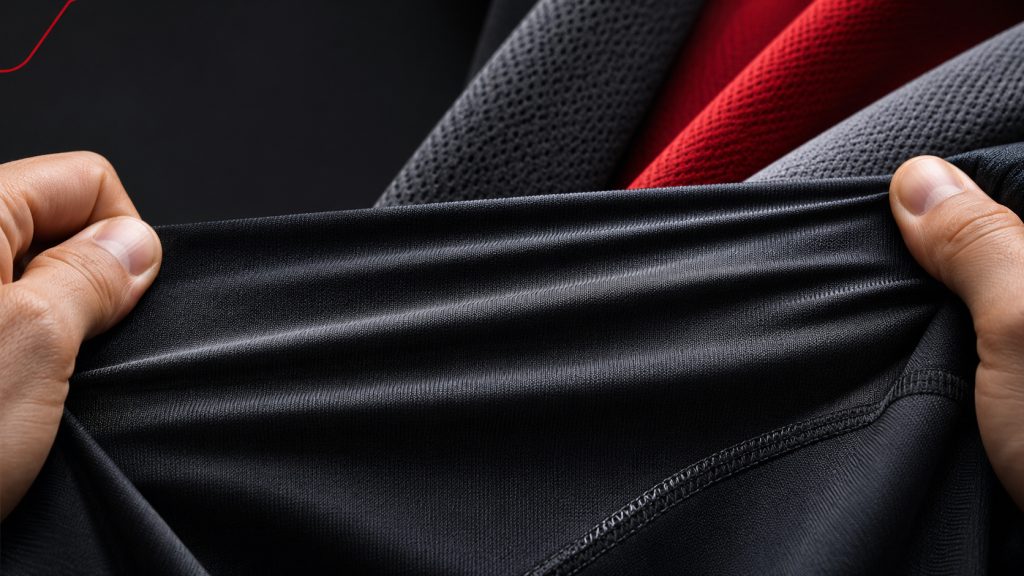
1. Fabric Quality: The Foundation of a Good Rash Guard
Fabric is one of the most important factors when developing a performance rash guard.
The material affects how the garment stretches, feels against the skin, recovers its shape and performs during training.
Common fabric options include:
Polyester-Spandex Blend
A popular option for sublimated sportswear. Polyester provides a suitable printing base, while spandex contributes stretch.
Nylon-Spandex Blend
Often selected for its smooth hand feel, flexibility and durability characteristics.
Polyester-Based Performance Fabric
Can be suitable for lightweight sportswear, depending on fabric construction and specifications.
What should you check?
- Fabric composition
- GSM (grams per square meter)
- Four-way stretch capability
- Stretch recovery
- Breathability
- Moisture management
- Fabric durability
- Skin comfort
Remember that a higher GSM does not automatically mean better quality. Fabric performance depends on the overall construction and intended application.
2. Proper Compression and Fit
A rash guard should fit close to the body without creating unnecessary restriction.
A garment that is too loose may move excessively during grappling, while an overly tight garment may cause discomfort and restrict movement.
A suitable compression fit should balance:
- Close body fit
- Stretch and flexibility
- Comfortable neckline
- Proper sleeve length
- Suitable torso length
- Adequate movement around shoulders
- Consistent sizing
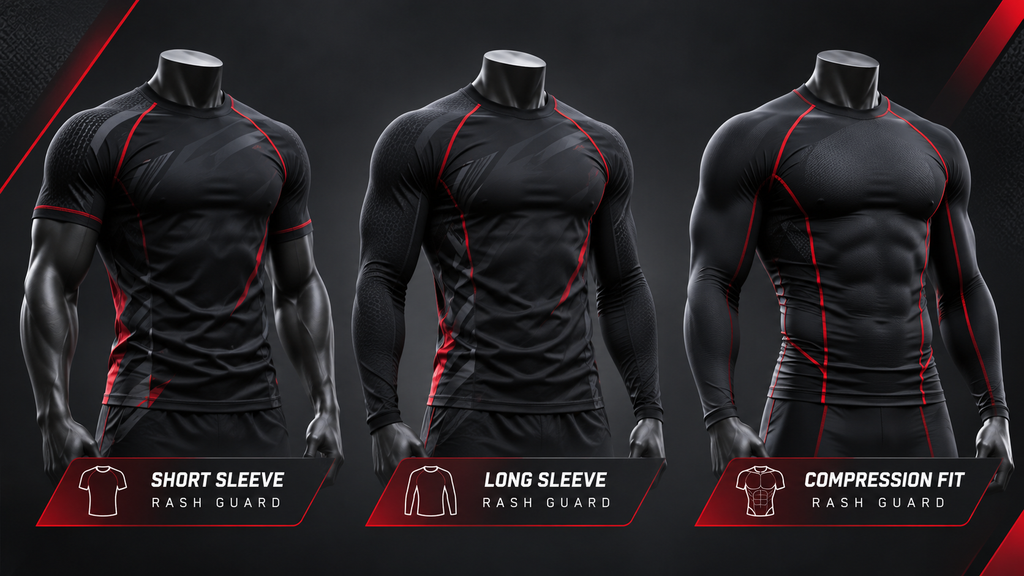
Different Rash Guard Fits
Short Sleeve Rash Guard
Commonly used for MMA, BJJ, grappling and general training.
Long Sleeve Rash Guard
Provides additional skin coverage and is popular in BJJ and grappling.
Compression Fit
Designed to fit closely against the body.
The correct fit should be evaluated through physical samples and movement testing.
3. Stitching and Seam Construction
Stitching plays an important role in the durability and comfort of a rash guard.
Combat sports garments experience repeated stretching, pulling and friction. Poor seam construction can lead to discomfort, seam failure or premature garment damage.
Common construction considerations include:
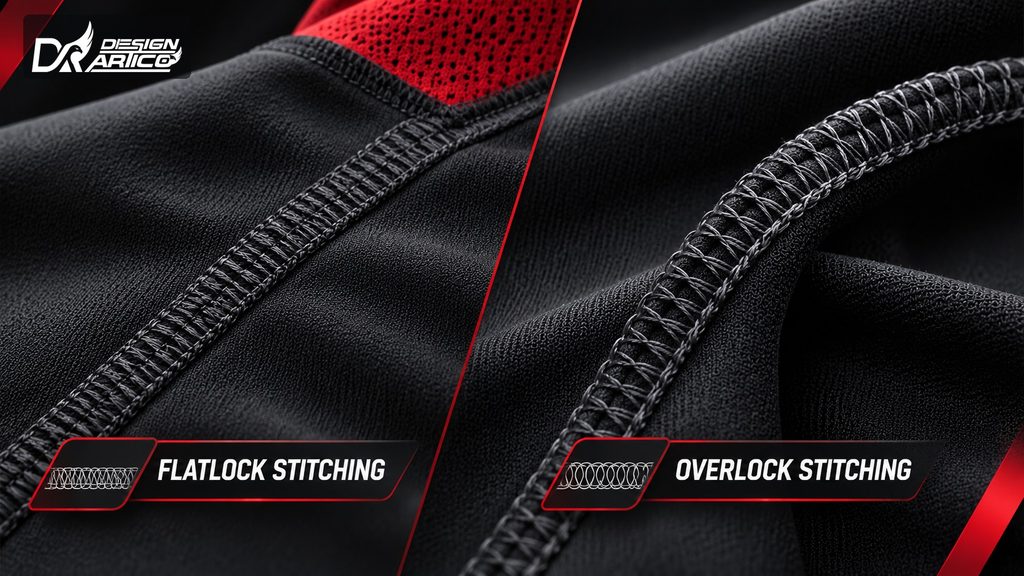
- Flatlock stitching
- Overlock stitching
- Reinforced seams
- Sleeve attachment
- Side panel construction
- Neckline finishing
- Hem construction
Flatlock stitching is commonly used in performance garments because it can provide a relatively flat seam profile.
However, the correct stitching method depends on the garment design, fabric and construction requirements.
What should brands inspect?
Pay attention to seam consistency, loose threads, uneven stitching, skipped stitches and areas under tension.
A professionally manufactured garment should have consistent finishing throughout.
4. Sublimation Printing Quality
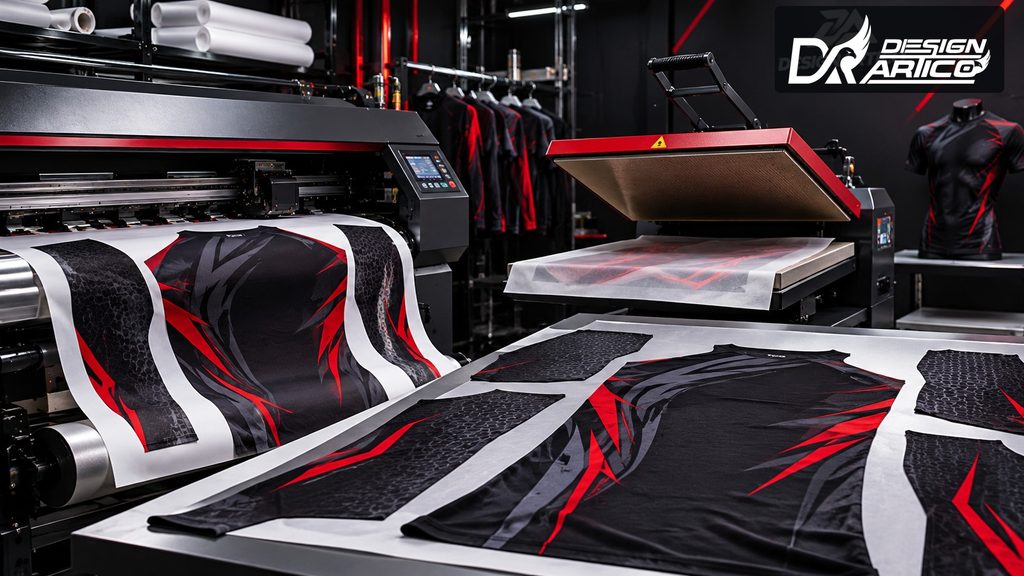
Custom MMA rash guards often feature bold graphics, complex patterns, logos and full-coverage artwork.
Sublimation printing is widely used for polyester-based rash guards because it allows detailed designs to be incorporated into the fabric.
It is particularly useful for:
- Custom team graphics
- BJJ gym uniforms
- MMA fightwear
- Full-panel artwork
- Complex patterns
- Custom brand collections
What makes good sublimation printing?
Look for:
- Consistent color reproduction
- Sharp graphic details
- Proper artwork alignment
- Accurate logo positioning
- Minimal unwanted color variation
- Correct panel-to-panel matching
The final result also depends on fabric quality, ink, transfer paper, heat press conditions and production control.
A good digital design must be prepared correctly for the actual garment panels.
5. Artwork and Panel Alignment
A professional MMA rash guard design should look good from every angle.
This means the artwork must be developed with the actual garment construction in mind.
Important design areas include:
- Front body panel
- Back body panel
- Left and right sleeves
- Side panels
- Shoulder areas
- Collar
- Hem
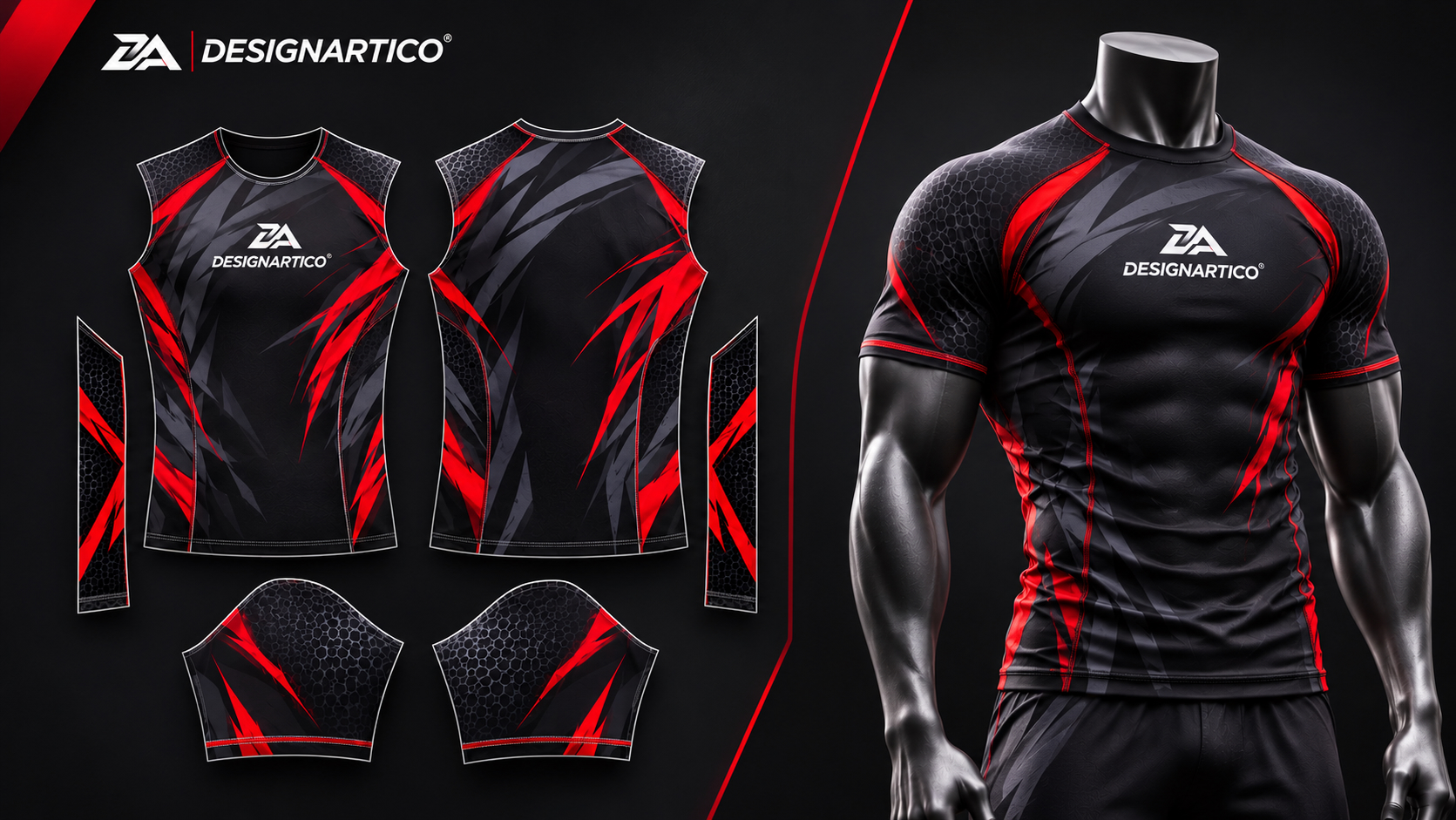
One common mistake is creating artwork without considering how the individual panels will be cut and assembled.
For example, a large graphic that crosses the shoulder seam needs careful positioning to avoid unwanted visual breaks.
Production-ready artwork should include:
- Correct garment panel templates.
- Appropriate artwork dimensions.
- Consistent color references.
- Proper bleed allowances where required.
- Logo placement.
- Seam and cutting considerations.
This is where professional apparel design and manufacturing preparation become especially important.
6. Comfort and Breathability
Comfort matters during long training sessions.
A rash guard should allow athletes to move naturally without feeling excessively restrictive or uncomfortable.
Important factors include:
- Fabric weight
- Moisture management
- Stretch recovery
- Seam placement
- Neckline construction
- Sleeve fit
- Skin feel
Breathability depends on the fabric structure and garment construction, not simply the fiber name.
For brands developing performance rash guards, fabric testing and physical samples are important before approving bulk production.
7. Durability During Training
MMA and BJJ apparel can experience demanding training conditions.
Garments may be exposed to repeated stretching, friction, washing and regular use.
To evaluate durability, consider:
Fabric durability: Does the material maintain its structure after repeated use?
Seam durability: Are stitching and seam construction suitable for repeated movement?
Print durability: Does the printed artwork maintain its appearance after appropriate washing?
Shape retention: Does the garment recover its original shape?
Testing should follow the garment’s intended use and care instructions.
8. Choose the Right Rash Guard Design
Design is an important part of creating a recognizable combat sports apparel brand.
A good design should balance visual impact with professional presentation.
Popular design directions include:
- Minimalist MMA graphics
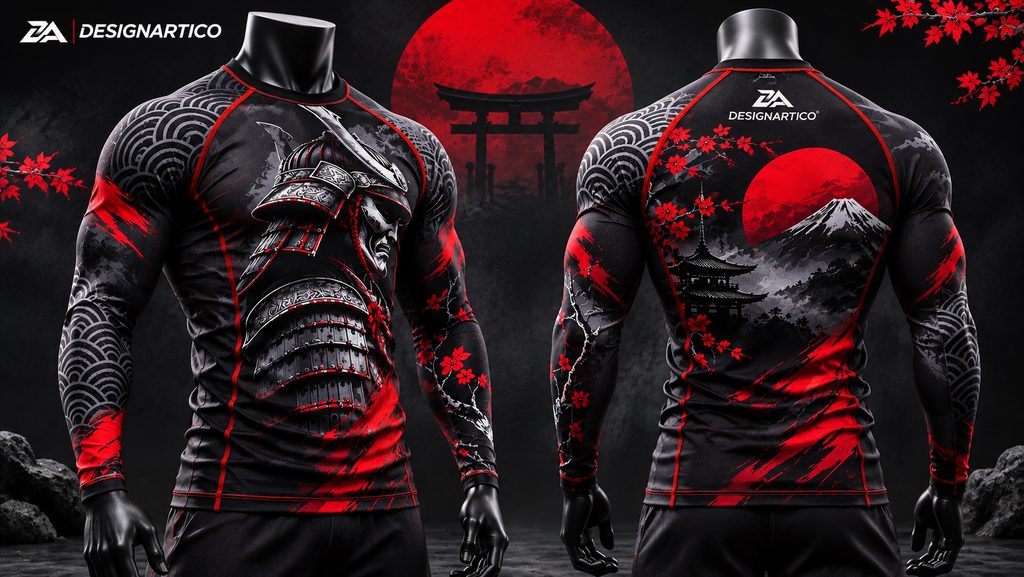
- Japanese-inspired artwork
- Samurai themes
- Geometric patterns
- Tribal-inspired graphics
- Abstract athletic patterns
- Bold typography
- Custom team identities
Think about your target audience.
A BJJ academy may prefer a different visual direction from a professional MMA fightwear brand.
Your design should reflect the identity of the brand and the people who wear it.
9. Check Sizing and Grading
A good rash guard should maintain a consistent fit across different sizes.
For brands selling multiple sizes, grading is an important part of garment development.
Consider:
- Chest measurements
- Waist measurements
- Body length
- Sleeve length
- Shoulder width
- Armhole dimensions
- Size tolerance
Do not assume that simply increasing garment dimensions by the same amount will create a suitable fit across every size.
The grading process should account for garment proportions and intended compression.
A sample in one size should not be the only reference for an entire collection.
10. Review the Sample Before Bulk Production
Before manufacturing a large quantity, request a physical sample.
Inspect the following:
| Quality Check | What to Review |
|---|---|
| Fabric | Composition, GSM and feel |
| Fit | Compression and movement |
| Stitching | Seam consistency |
| Printing | Color and artwork clarity |
| Panels | Artwork alignment |
| Sizing | Measurements and proportions |
| Finishing | Neckline, sleeves and hems |
| Washing | Appearance after care testing |
A sample gives you an opportunity to identify problems before they become expensive production issues.
11. What Should Brands Ask an MMA Rash Guard Manufacturer?
If you are developing a custom fightwear collection, ask your manufacturer these questions:
- What fabric compositions do you offer?
- What GSM options are available?
- Can you manufacture short and long sleeve rash guards?
- Which stitching methods do you use?
- Do you offer full sublimation printing?
- Can you work with custom panel artwork?
- What is your minimum order quantity?
- Can you provide physical samples?
- Do you offer custom labels and packaging?
- What quality checks are performed before shipment?
These questions help you understand whether the supplier can meet your product requirements.
How DesignArtico Supports Custom MMA Apparel Development
Creating a professional fightwear collection requires a combination of creative design and technical preparation.
DesignArtico works with combat sports and apparel brands on custom sportswear design and production-ready artwork.
Our services include:
- Custom MMA rash guard design
- BJJ rash guard design
- Short sleeve and long sleeve rash guards
- MMA shorts design
- Custom sublimation graphics
- Technical apparel layouts
- Production-ready artwork
- Editable design files
- Apparel collection development
Whether you are developing a new fightwear brand or expanding an existing collection, the focus is on creating professional designs that are prepared with manufacturing requirements in mind.
Planning your next MMA or BJJ apparel collection?
Contact DesignArtico to discuss your custom apparel design requirements.
Frequently Asked Questions
What fabric is best for an MMA rash guard?
Polyester-spandex and nylon-spandex blends are common options. The best choice depends on stretch, recovery, comfort, durability and printing requirements.
What is the difference between an MMA rash guard and a regular compression shirt?
MMA rash guards are designed for combat sports applications and typically require consideration of garment fit, seam construction, fabric performance and repeated physical contact. Regular compression shirts may be designed for general fitness or other athletic activities.
Are sublimation rash guards durable?
Well-produced sublimation prints on suitable polyester-based fabrics can provide durable graphics. Actual performance depends on fabric, printing conditions and garment care.
Should an MMA rash guard be tight?
It should fit close to the body without restricting movement. The appropriate compression level depends on the intended use and garment design.
Can I create my own custom MMA rash guard?
Yes. Brands can develop custom artwork, colors, logos and garment specifications to create their own rash guard collections.
What is the difference between short sleeve and long sleeve rash guards?
Short sleeve rash guards provide less arm coverage, while long sleeve versions provide additional skin coverage. Both are used in combat sports depending on athlete preference and training requirements.
Conclusion
A high-quality MMA rash guard is the result of several elements working together.
Fabric + Fit + Stitching + Printing + Artwork + Construction + Quality Control
Every element contributes to the final garment.
For apparel brands, the objective should not be to create something that only looks impressive in a product photograph. The garment should also meet the practical requirements of athletes and the expectations of customers.
A well-developed rash guard starts with thoughtful design and continues through proper technical preparation, sampling and manufacturing.
Build your combat sports apparel collection with the right design foundation.
POPULAR POSTS
How to Choose the Right Clothing…
How to Choose the Right Clothing Manufacturer for...
How to Design a Custom Rash…
What Is a Custom Rash Guard? A custom...
How to Design Custom Activewear That…
Custom activewear needs to do more than look...
What Makes a High-Quality MMA Rash…
An MMA rash guard is more than just...